
NCIFC – National Cyber Industry Framework Certification
Enhance and standardise your businesses cybersecurity by improving its security posture.
Analysed by industry experts with a combined 40 years in the field.

Our Aim
The aim of NCIFC is to significantly enhance and standardise cybersecurity practices across enterprises of all sizes. This certification will serve as a comprehensive guideline and benchmark for businesses to improve your security posture.
Certification Levels
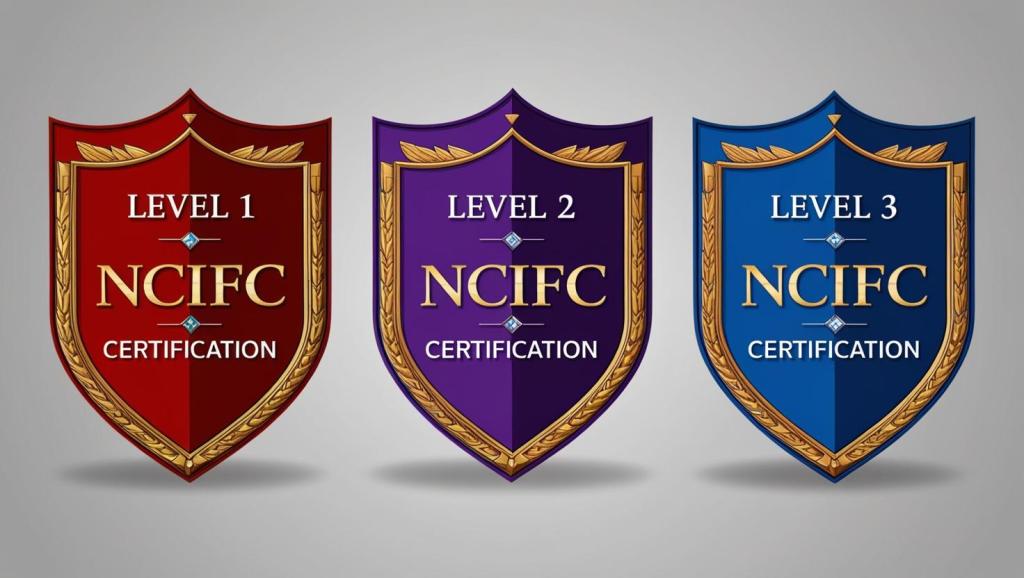
Our certification levels come in 3 Levels
————————————————————————————————
Level 1 Certification
Tailored at small enterprises 30 employees or fewer
Level 2 Certification
Tailored at Medium enterprises 30 – 150 employees.
Level 3 Certification
Tailored at large enterprises 150+ employees.
————————————————————————————————
All Certifications will require a certification Renewal every 2 years.
Our Sectors – Version 1
————————————————————————————————
Sector 1 – Account Hygiene
Focuses on maintaining and managing user accounts securely, including password policies, regular account reviews, deactivation of inactive accounts, and preventing unauthorised access through strong authentication practices.
Sector 2 – Security Awareness
Promotes educating employees about security best practices, such as recognising phishing attacks, handling sensitive data, and understanding organisational security policies to build a culture of security within the work place.
Sector 3 – Malware Defences
Involves implementing safeguards against malicious software, including antivirus programmes, firewalls, intrusion detection systems (IDS), and system monitoring to detect and mitigate the spread of malware and other threats.
Sector 4 – Data Protection and Encryption
Focuses on protecting sensitive data from unauthorised access, loss, or corruption. This includes encryption, secure storage, data masking, and implementing robust access control mechanisms for both structured and unstructured data.
Sector 5 – Incident Response and Recovery
Describes the procedures for responding to cybersecurity incidents, including identification, containment, eradication, and recovery. It also includes developing disaster recovery plans to minimise data loss and ensure business continuity.
Sector 6 – Vendor and Third-Party Management
Involves managing and assessing third-party vendors and service providers to ensure they meet cybersecurity standards and do not pose risks to the organisation’s security. This includes regular audits and contract clauses that enforce security practices.
Sector 7 – Network and Infrastructure Security
Focuses on securing the network and its components, including firewalls, intrusion prevention systems, VPNs, and segmentation. This ensures that unauthorised access and data breaches are prevented across network infrastructure.
Sector 8 – Identity and Access Management (IAM)
Manages digital identities and user access to systems, applications, and data. This includes implementing multi-factor authentication (MFA), role-based access control, and monitoring of user activities to ensure authorised access.
Sector 9 – Threat Intelligence and Vulnerability Management
Involves collecting and analysing threat data to proactively defend against emerging cyber threats. This sector includes vulnerability scanning, penetration testing, and applying threat intelligence to prevent attacks.
Sector 10 – Application and Software Security
Ensures the secure development and maintenance of applications, from secure coding practices to vulnerability testing. It includes addressing security vulnerabilities in the software development lifecycle (SDLC) through code reviews and security tools.
Sector 11 – Security Operations Centre (SOC)
A centralised unit responsible for monitoring, detecting, and responding to security events in real time. The SOC maintains continuous surveillance of networks, systems, and data to identify and mitigate cyber threats promptly.
Sector 12 – Risk Management and Compliance
Involves assessing, managing, and mitigating cybersecurity risks while ensuring compliance with relevant regulations and industry standards such as GDPR, HIPAA, or PCI-DSS. This sector focuses on identifying potential threats and implementing strategies to address them effectively.
Sector 13 – Cloud Security
Secures cloud environments by protecting data, applications, and services hosted in the cloud. This includes securing APIs, implementing identity management, encrypting data, and ensuring cloud providers adhere to security standards.
Sector 14 – Endpoint Protection
Protects devices that connect to an organisation’s network such as laptops, desktops, and mobile devices from threats. This sector includes deploying antivirus software, endpoint detection and response (EDR) tools, and ensuring devices are properly secured.
Sector 15 – Penetration Testing and Vulnerability Assessment
Simulates real-world cyberattacks on systems to identify vulnerabilities and weaknesses before malicious actors can exploit them. Regular testing and assessments help ensure security controls are effective in preventing breaches.
Sector 16 – Data Loss Prevention (DLP)
Focuses on preventing the unauthorised sharing, movement, or loss of sensitive data. DLP solutions monitor, detect, and block the transfer of critical information across networks and devices, ensuring compliance with data protection regulations.
Sector 17 – Security Policy and Governance
Involves developing and enforcing cybersecurity policies, frameworks, and standards across the organisation. This sector ensures that security protocols are clear, followed consistently, and aligned with industry best practices and legal requirements.
My experiance in this field consists of previously analysing various security frameworks against a corparations current security practices, allowing them to improve there security posture over time.
Creator – Samuel D Johnson

“If you put a key under the mat for the cops, a burglar can find it, too. Criminals are using every technology tool at their disposal to hack into people’s accounts. If they know there’s a key hidden somewhere, they won’t stop until they find it.”
Tim Cook
Have questions? Want to learn more?
Your message has been sent

 NCIFC - National Cyber Industry Framework Certification